What Is Upselling? Ways to Retain Clients and Bundle Services

Upselling should deepen a client relationship, not simply increase the sale. It means recommending a higher-value version or expanded scope of a service the client already needs. Effective upselling strategies for professional services tie that recommendation to a clear business outcome. Cross-selling is different: it introduces a complementary service.
It’s understandable to be cautious about offering more. A recommendation disconnected from a client’s priorities can undermine trust, while a well-timed option can address a broader need and make the engagement more useful. The distinction comes down to relevance: does the client need a more comprehensive version of the service they’re considering, or a different service that complements it?
This article explains how upselling works, how it differs from cross-selling, and how to shape service bundles around client goals. You’ll also find practical ways to introduce expanded offers, use feedback to guide recommendations, and assess whether your approach supports retention and sustainable revenue growth.
Key Takeaways
- Use open-ended questions and client feedback to uncover priorities before recommending a larger service scope.
- Bundle complementary work around a shared client outcome, making the connection between each service and its value clear.
- Distinguish an upsell, which expands or upgrades a current service, from cross-selling, which adds a complementary service.
- Use client needs and engagement signals to guide timing; HubSpot CRM Implementation can help organize the information that supports relevant recommendations.
1. How can a business use upselling to improve customer retention?
Identify opportunities by comparing client goals with the current scope. Gaps in reporting, campaign reach, or sales handoffs can signal an unmet need. Strong recommendations start with evidence, not a generic offer.
Ask open-ended questions before proposing expanded work. Try, “What is limiting progress toward your current goal?” or “Which part of the process creates the most friction?” Follow with, “What would a better outcome look like?” These prompts help clients describe their priorities in their own words. Listen for recurring concerns, then summarize them to confirm your understanding. This turns selling into a useful conversation and strengthens the relationship.
Use customer intelligence to make the recommendation relevant. Review CRM notes, past project outcomes, service usage, and feedback for patterns. For example, if account records show that campaign engagement is strong but sales follow-up is inconsistent, a client may need support aligning marketing and sales. The likelihood of selling to an existing customer can reach 60–70%, but a recommendation still needs to fit. A well-matched expansion can create additional revenue while helping clients address a real business priority.
Timing matters. Raise an upsell during a scheduled account review, after a successful project milestone, or as a contract nears completion. These moments give both sides a chance to assess results and discuss the next objective. Use CRM reminders to prepare, then bring evidence such as completed deliverables, open challenges, and the client’s stated goals. Marketing automation can also organize relevant engagement signals for timely follow-up.
Use feedback and account reviews to identify unmet expectations, not just new sales opportunities. Ask clients what is working, where they encounter obstacles, and what outcome matters next. The U.S. Environmental Protection Agency notes that feedback about needs, expectations, and experiences can help assess service satisfaction. Record responses in the CRM, assign a follow-up owner, and connect any proposed work to the client’s stated priority. A coordinated approach to marketing and technology services can help teams turn those insights into relevant next steps.
2. Bundling products or services
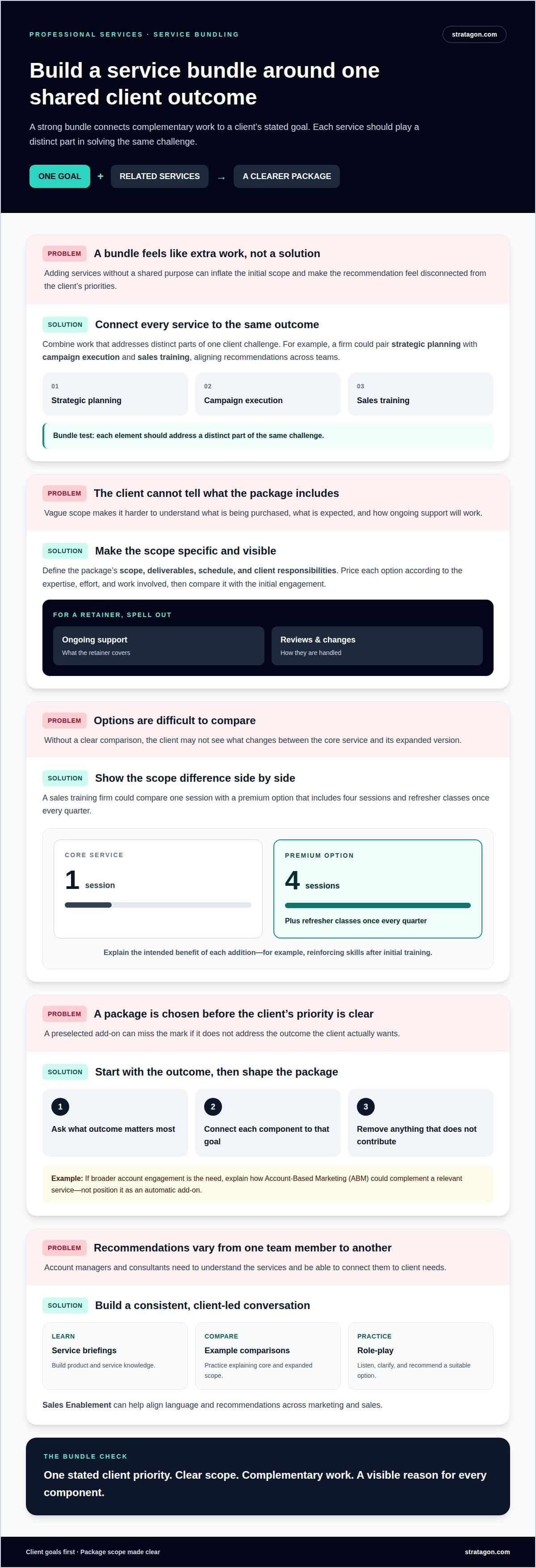
A strong bundle combines services that advance one shared client outcome. For example, a firm might pair strategic planning with campaign execution and sales training, aligning recommendations across teams. Each element should address a distinct part of the same challenge, not inflate the initial scope. Explain how the services work together and what the client can expect from each.
Package upgrades by defining the scope, deliverables, schedule, and client responsibilities. Price each option according to the expertise, effort, and work involved, then compare its scope with the initial engagement. For a retainer, specify what ongoing support covers and how reviews or changes are handled. This makes the decision clearer and shows exactly what the client is buying.
Use a side-by-side comparison to show the difference between a core service and an expanded package. A sales training firm, for instance, could offer four sessions instead of one, with refresher classes once every quarter in a premium option. Describe the intended benefit of each addition, such as reinforcing skills after initial training. Personalize recommendations and present only options that address the client’s stated priorities.
Train account managers and consultants to lead with client needs, not package targets. Build product knowledge through service briefings, example comparisons, and role-play: one person raises a business problem while another listens, clarifies, and recommends a suitable option. Sales Enablement can help teams align their language and recommendations across marketing and sales.
Before presenting an upsell, ask what outcome matters most, then connect each component to that objective. If the client needs broader account engagement, explain how Account-Based Marketing (ABM) could complement a relevant service rather than treating it as an automatic add-on. Review the package against the client’s goals and remove anything that doesn’t contribute. A structured sales enablement approach can help teams make these conversations more consistent.
3. Upselling versus cross-selling
Upselling recommends a more comprehensive version of a service the client already uses or is considering. Cross-selling introduces a different, complementary service. In professional services, expanding a marketing strategy engagement is an upsell; adding sales training to that engagement is cross-selling.
The distinction depends on the client’s starting point. If a firm expands an existing website project to include additional functionality, it’s upselling the website service. If it recommends marketing automation to support that website, it’s cross-selling. The first expands the scope or version of the original service; the second adds a separate capability.
Choose the approach that fits the problem. A client seeking stronger campaign performance may need a more comprehensive version of its current marketing engagement. A client struggling to turn campaign responses into sales conversations may benefit from a complementary sales process service. In both cases, connect the recommendation to the stated need, not simply to a larger contract.
Use three steps to make the distinction clear. First, identify the service the client currently values. Next, determine whether the gap calls for expanding that service or adding a different one. Then explain how the proposed scope addresses the gap. A side-by-side comparison can show what stays the same, what changes, and what new work a complementary service adds.
Timing and preferences also shape the recommendation. If a client asks for deeper analysis during a reporting review, an expanded analytics scope may be a relevant upsell. If the review reveals a need to coordinate marketing and sales, a complementary service may fit better. Listen to the client’s priorities, confirm the desired outcome, and explain the benefit before discussing either option. This clarity supports satisfaction and keeps both types of offer from feeling unrelated.
Upselling and cross-selling can work together, but they solve different problems. A firm might first expand a strategy engagement to address a broader goal, then introduce a complementary service to support implementation. Keep each recommendation distinct, show how it connects to the client’s objective, and let the client’s needs guide the next step.
4. Upselling in service-based businesses
Effective upselling strategies for professional services start with a client outcome, not a preset package. Review the engagement history, agreed objectives, and completed work before suggesting an upgrade. Then connect the proposed scope to a specific need, such as faster reporting or more consistent implementation. This grounds the recommendation in the relationship and gives the client a clear reason to consider it.
Examples vary by discipline. A consultant could suggest continued implementation support after delivering a strategic plan. A law firm might offer ongoing contract review alongside a completed legal project. An accounting firm could propose regular financial analysis after preparing statements. A marketing firm might recommend campaign optimization after reviewing results. In each case, the additional work should address a need that emerged from the original engagement.
Timing and clarity matter. Present an option after a successful milestone, during a scheduled review, or as a contract approaches renewal. Explain what changes, what remains in scope, and how the new work supports the client’s stated goal. Invite discussion by asking whether the recommendation fits the client’s priorities. Avoid pressure or vague promises; clients need to understand the service before deciding.
Track the quality of recommendations alongside commercial outcomes. Record which services clients choose, what prompted their decisions, and whether follow-up feedback reflects satisfaction. If clients repeatedly decline an offer, review its timing, relevance, and explanation rather than simply repeating it. Use account reviews to compare the original objective with delivered work and identify the next useful step.
For marketing teams, Account-Based Marketing (ABM) or Marketing Automation may be relevant upgrades when they address a defined growth or coordination need. Link each option to the client’s objectives, audience, and operating process, then clarify how success will be assessed. To connect service scope with business priorities, explore strategic marketing services.
Stratagon: HubSpot CRM Implementation
Stratagon helps professional services firms connect client information with the processes that support relevant account growth. HubSpot CRM Implementation provides a structured foundation for organizing customer relationships and sales activity, helping teams coordinate follow-up and identify how client needs may be evolving.
Turn to Stratagon when account information is difficult to use across marketing and sales, or when teams need clearer processes for managing client engagement. Digital transformation and Sales Enablement can support broader changes to systems and team practices, while Account-Based Marketing (ABM) can align marketing activity around priority accounts. The right next step depends on the business challenge and how teams currently work.
For a practical conversation about CRM implementation and client growth processes, contact Stratagon.
Build a Client Growth System That Scales
Make client expansion a coordinated capability, not a series of isolated sales conversations. A disciplined approach to upselling strategies for professional services firms connects account insight, team judgment, and delivery planning. This alignment helps teams identify opportunities while keeping client priorities central.
Stratagon supports this work through HubSpot CRM Implementation, helping organize the information teams use to manage relationships and follow-up. Digital transformation can address broader process and technology needs, while Account-Based Marketing (ABM) can align engagement around priority accounts. Together, these capabilities connect commercial planning with the systems and teams responsible for execution.
Choose a next step that matches your current challenge, whether that means improving CRM processes or aligning account engagement. Contact Stratagon to discuss your strategy and identify a practical path forward. Stronger client growth begins with a clear decision about what your teams should improve next.
Frequently Asked Questions
What is upselling?
Upselling means recommending a higher-value or more extensive version of a service the customer is considering or already receives. For example, a consulting firm could expand a diagnostic engagement to include implementation planning. The recommendation should clarify what additional work the client receives and why it fits their objective. An offer adding a separate, complementary service is cross-selling instead.
How Do I Measure The Success Of My Upselling Strategy?
Measure whether expanded engagements create value for clients as well as additional revenue. Compare accepted offers with offers made, then review engagement value and delivery costs. Also examine renewal patterns and client feedback after the expanded work begins. A useful review asks not only whether clients accepted, but whether the added scope addressed the need behind the recommendation.
How can a business use upselling to improve customer retention?
Use upselling to help clients move from an initial engagement to the next relevant stage of their work. For example, after completing a strategy project, a firm could propose support for putting the agreed plan into practice. Set clear milestones and review progress with the client. This makes continued work purposeful, gives clients visibility into outcomes, and provides a reason to maintain the relationship.
What Are Common Mistakes To Avoid When Implementing Upselling Techniques?
Avoid proposing extra work before understanding the client’s objective, presenting a package without defining its scope, or implying an outcome the service cannot control. Another mistake is focusing on acceptance while overlooking delivery capacity. Before expanding a campaign engagement, for instance, define the new work, responsibilities, and review process. Clear boundaries help clients make informed decisions and teams deliver what they agreed.
How can consultants and agencies uncover client needs without sounding pushy?
Frame discovery as a working conversation, not a sales interrogation. Ask what has changed since the project began, which decision is hardest to make, and what the client needs to accomplish next. Then reflect their answer in plain language and ask whether you understood correctly. Suggest additional work only after the client confirms the need. If no relevant gap emerges, keep the conversation focused on current delivery.
What metrics should professional services firms track to measure upselling success?
Track average engagement value, upsell take rate, customer lifetime value, conversion rate, and return on investment. Take rate shows how often an offer is accepted; conversion rate shows how proposals progress to agreements. Review these alongside delivery effort and client feedback, so increased revenue does not obscure scope strain or poor fit. Compare results across service lines to see where offers effectively address client needs.